
Opening the shoebox: Innovation in a traditional industry
In order for the industry to keep its tradition alive, it must move forward and think outside the shoebox.
Written by Williane Tobias

For an industry that has been in the Philippines since the 19th century, there are bound to be changes–just like how it evolved from a cottage industry into what it is today. Given the numerous struggles of shoemakers and the decline of shoe sales, what does it take to keep the tradition of shoemaking alive while still implementing innovation and change?
Marikina-made shoes–in the eyes of the youth
How do Marikina-made shoes hold up with the Gen Z Youth? In an interview with youths aged 18 to 25, we explored the different perceptions the Filipino youth have of the Marikina shoemaking industry and its product.
For some, Marikina-made shoes are remembered well by the older generations. Celina, a multimedia arts student, recalled “I feel like before, during the time of my parents, I remember them talking about it very fondly.” She’s not the only one who found out about these shoes through her parents, as Abby, an economics student, shared how she came to know Marikina-made shoes “My mom was the first one who tried it out years ago and then when I needed doll shoes for a special occasion, she allowed me to borrow hers which was from the Marikina shoe industry.”
When it comes to affordability, it’s a mixed bag for these young consumers. For Ja, a Marikina citizen and college graduate, “quality is yes, affordability is quite a no. ang sabi nila, ang mga sapatero ng Marikina, nagddwindle down kasi, dami na rin kasi China-made na shoes eh (What they are saying though, the Marikina shoemakers, sales are going down because there’s China-made shoes).” When comparing Marikina-made shoes to Chinese imports, the latter is cheaper. In comparison to international brands however, it’s the opposite. “The pair I did buy was affordable, around 300 […] And I think it’s really good for a pair of sandals like that because I imagine [other brands] are pretty expensive. And the pair that I got, until now, it’s okay naman. Matibay (strong).”
The youth recognizes the quality of Marikina-made shoes. For Hannah, fashion enthusiast and college student, she said “When my parents ask me to buy online, I would opt for Marikina shoes over shoes from China because they’re better quality.”
Marikina-made shoes are also known for their durability, “It really lasts a long time. They’re also very comfortable,” Abby said. For mechanical engineering student Jan, he said “[Local shoes] have decent quality and are expected to last 3-4 years, but not necessarily stand out design or standout feel.” This takes us to one of the current problems of the industry: its lack of new designs and proper marketing.
A change of style…and marketing
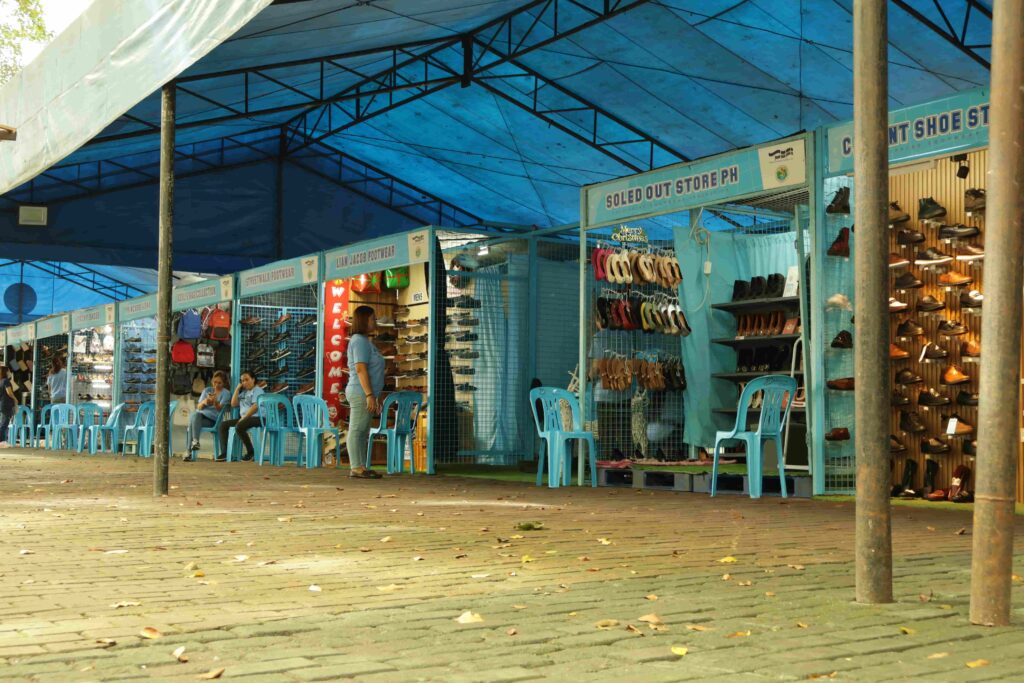
The Marikina shoe industry and its shoes are mostly seen as “traditional.” When asked to describe Marikina-made shoes in one word, “traditional” was the most common one used amongst our interviewees. “I mostly think of tradition. As I mentioned, my parents really, as soon as they think of good shoes, they immediately think of Marikina,” Celina said, a callback to how some interviewees knew of Marikina-made shoes by older generations. This is not surprising as its peak was in the 70s to 80s.
For Joash, a student athlete, tradition can have its downsides “[Marikina shoes] it’s not as popular with the modern trend or fashion right now. Or it isn’t something for casual wear, like most of the Gen Z people would wear […] It doesn’t fit this modern society. I guess they haven’t changed”
When the industry competes against cheaper labor and prices, it’s a losing game, especially when the influx of products from China is a factor of the industry’s decline. But what the shoemaking industry has is its tradition of good-quality and durable shoes. In an interview with a lawyer based in Marikina, Atty. Justin said “So, where do we compete? Quality and creativity.”
The shoemaking industry can lean on its good quality and durability, alongside newer and more creative shoe designs. This can also just mean catering more on what the youth’s style preferences are.
For college student Hannah Cailles, who is part of her school’s fashion organization, she has noticed a trend which the Marikina shoe industry can follow, “The fashion trends right now is that we as a generation have a lot of basics. Everything is a repeat […] People will start to look for items that are more unique. Or what’s the term for it? Artisan, […] the Filipino art scene is actually going to be on the rise, or at least that’s the prediction, so I feel like [they should] lean into that.”
By giving Marikina a fresh rebrand that caters more to the youth and other audiences, they can steer away from the usual leather shoes: cosplay and drag performances call for customized shoes, as well as youths who are serious about fashion. While customization and made-to-order shoes is nothing new, they can market outside of their usual target demographic.
Innovation and Tradition can coexist
Tradition does not have to be sacrificed in order for the industry to move forward. Shoemakers can still keep traditional techniques but integrate new designs and audiences into the fold. But it’s also important to keep in mind that shoe businesses can only do so much, and that many of the problems within the industry can only be solved on a government level. Even if the shoe businesses would make new designs or market more, they don’t have as large of a budget as bigger companies. This is pointed out by Marikina resident and Arts Management student Wynn “There’s not a lot of marketing for Filipino shoes, for example, because it’s made by local businesses. They don’t have all of the money to do this whole marketing scheme with videos and fancy stuff. They don’t have those available to them.”
The best way forward is for both the government and shoe businesses to do what they can: the government can pass more law and policy in support of shoemaking, not just focusing on the fiscal aspect but strengthening the education side of it. On the business side, they can improve their designs and widen their reach.
“They try to stick with their tradition, which is okay, but at the same time, times change [just like] how fashion changes over time. So they have to adapt to that so that they could stick with their tradition somehow but at the same time, be for the people and not just for themselves,” Joash said when asked what his suggestions were for the Marikina shoemaking industry.
He also added how they must rethink why they continue with their shoemaking tradition–because if it doesn’t support the shoemakers nor cater to the people, what is it for?
“Like, they’re an industry. They’re an industry, trying to be an industry just because they had a historical [past] but not because they’re an industry trying to support the people.”
For the Marikina shoemaking industry to move forward, it must rethink the ways in which it operates. From its shoe designs to its marketing, there’s ways forward for these shoe businesses. However, innovation and change must happen both on a local level and government scale.
Share this article!
For ways on how you can help the shoemaking industry yourself, check this article:
Marikina-Made Shoes Made Your Way: Shoemaking Isn't Just for the Sapateros
WRITTEN BY WILLIANE TOBIAS
Share your Thoughts
How did you feel about the article? Answer the prompt or simply join the discussion!
The article emphasizes that tradition and innovation can coexist. Name one product or feature (e.g., custom cosplay boots, 3D-printed insoles, sustainable leather alternatives) you believe a Marikina shoemaker could create to attract your age group immediately.