
Opening the Shoebox: Innovation in a Traditional Industry
In order for the industry to keep its tradition alive, it must move forward and think outside the shoebox
WRITTEN BY WILLIANE TOBIAS

Share this article!
For an industry that has been in the Philippines since the 19th century, there are bound to be changes–just like how it evolved from a cottage industry into what it is today. Given the numerous struggles of shoemakers and the decline of shoe sales, what does it take to keep the tradition of shoemaking alive while still implementing innovation and change?
Government support
During the pandemic, shoemaking businesses had to adapt to the new normal of online selling. Some businesses adapted, such as the one shoemaker Bong worked under. He talked about how it became a necessity during the lockdown: “Kahit paano, nakakapag-deal kami rin kami dahil sa social media. Nakakatulong naman. […] Pagka wala kang social media [at] may negosyo ka, wala. (Somehow, we still got to make deals because of social media. It helped in a way. If you have no social media and you have a business, you’ll end up with nothing)”
Marikina-made shoes are mostly sold in physical stores and bazaar stalls, some even being displayed in informal places such as houses. One can only imagine the shoemaking industry’s transition from their usual face-to-face transactions to online shopping. Not everyone made the switch to online as soon as the pandemic hit: Christopher Jessie, one of the younger shoemakers we’ve interviewed, said that they only made an online platform for selling their shoes as late as 2023. He shared what kept their business afloat, saying “Nung pandemic, nagpapa-made-to-order lang. May gathering, kasal, kami gagawa ng sandals or sapatos ng mga lalaki, ganyan. (During the pandemic, we only produced made-to-order shoes. So if there’s a gathering, or a wedding, we’re the ones who make the sandals or shoes for men, things like that.)”
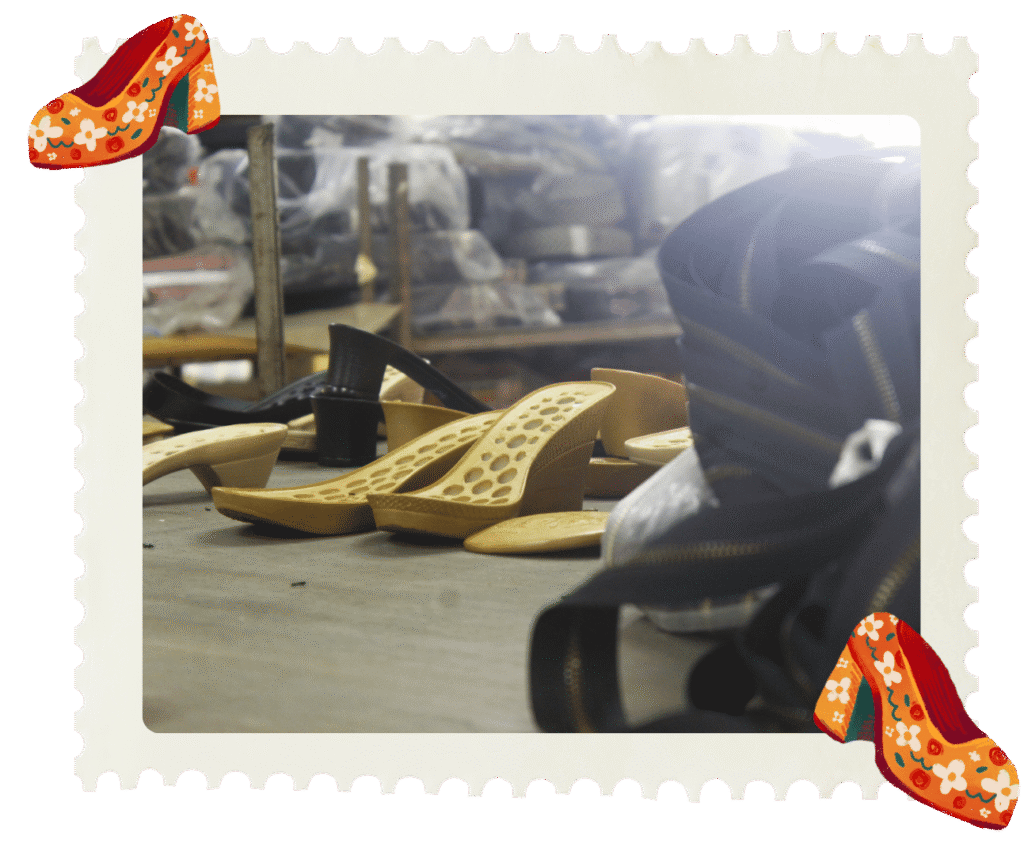
Marketing the proudly Marikina-made shoes
How are the shoe businesses marketing their products now? Similar to how most businesses have shifted to selling online, shoe business owners take to social media for promoting their products. “Kasi dito sa amin bilang magagawa lang, hindi namin masyadong [alam kung] paano. Pero alam namin may social media, sa may-ari talaga. Sila ang nakakaalam (Because as laborers, we don’t know how to [do social media], the social media is run by the owner, they’re the ones who know how)”, shoemaker Bong said, which shows just who does the marketing for the shoes online. Not all shoemakers are equipped with the knowledge on how to sell their product, it’s a skill reserved mostly for shoe business owners.
This is a problem pointed out by Atty. Manjares, who believes that government support should include education. He listed down what needs to be taught in the business seminars and workshops the Department of Trade and Industry (DTI) already offered such as “Proper costing, cash flow monitoring, marketing, branding, intellectual property protection, distribution channels, and how to properly understand the basic contract.”
Why does it matter? Because shoemakers like Bong leave marketing and social media to the business owners, when he himself also knows what makes his product special: his lengthy process and labor that produces a pair of shoes. Marketing matters because it’s how their hard work gets exposure and the spotlight it needs, to quote Manjares, “[It’s] Much more than the basic craft of making the shoe. Because making the shoe can only get you so far. It’s actually getting it out there to people.”
The Marikina shoe industry has had the same identity since the 70s. When describing Marikina shoes, the words “affordable”, “durable” and “traditional” get thrown around a lot. There’s nothing wrong with those descriptors, but when the industry competes against cheaper labor and prices, it’s a losing game especially when the influx of products from China is a factor of the industry’s decline. What else do Marikina shoes have to offer aside from its well-known durability and affordability in this day and age?
For college student Hannah Cailles, who is part of her school’s fashion organization, she has noticed a trend which the Marikina shoe industry can follow, “The fashion trends right now is that we as a generation have a lot of basics. Everything is a repeat […] People will start to look for items that are more unique or artisan, […] the Filipino art scene is actually going to be on the rise, or at least that’s the prediction, so I feel like [they should] lean into that.”
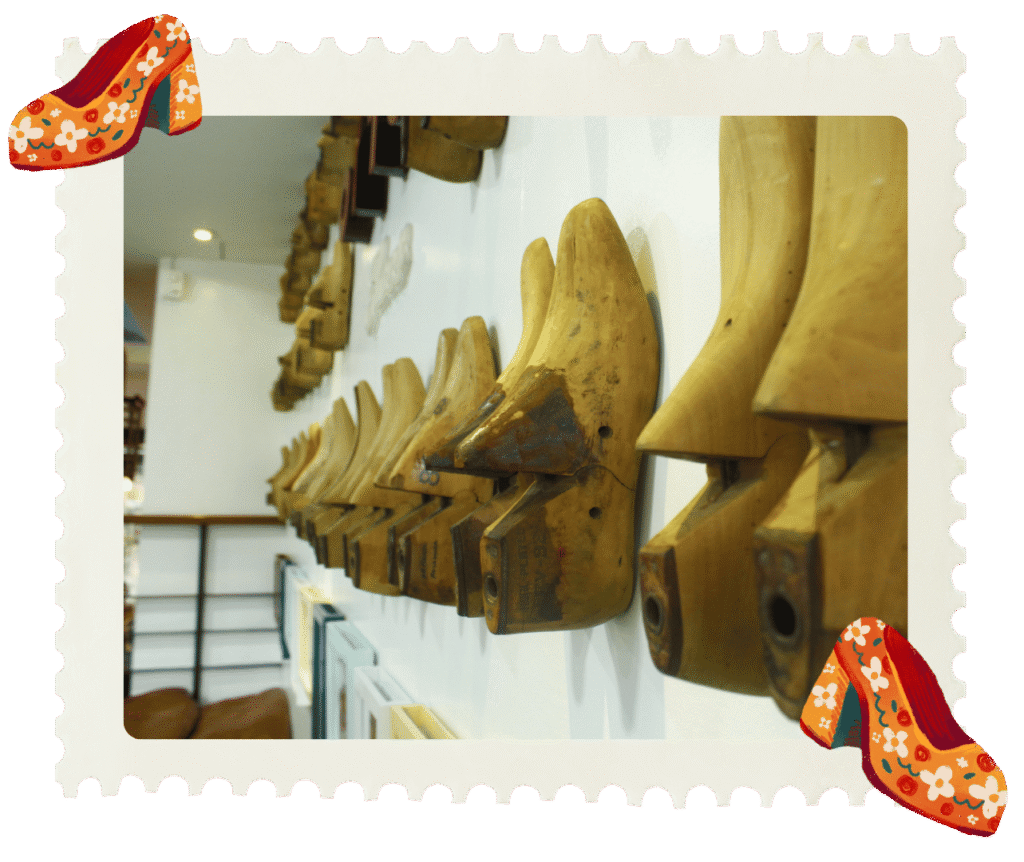
Yet this leaves the industry with unanswered questions: there’s no one-size fits all solution to these businesses. Not every Marikina shoe business offers artistic designs, nor does every business offer leather school shoes. Some businesses offer sandals, boots, and other forms of footwear. The one thing that ties all Marikina shoe businesses together is still the trademark durability and quality. The solution here seems to be that each shoe business must play to its strengths and lean towards what makes their product good, it can be the design, the material used or the decades of experience in each shoe. It can also be just as effective to show why your product is quality. The product just needs to be promoted and showcased.
Tradition does not have to be sacrificed in order for the industry to move forward. The shoemaking industry also doesn’t need to follow each trend just to keep up with the youth. Shoemakers can still keep traditional techniques but integrate new designs and audiences into the fold.
While the situation of each shoe business is different, it’s a must for businesses to utilize online platforms to both sell and market their footwear in this day and age. When it comes to their shoe designs, each business has their own niche: It’s a matter of clearly marketing to their target audience, whether they’re an upper class luxury brand or a down to earth affordable brand. There is a need for variety in this traditional industry, especially when its shoe designs are mostly traditional.
Share this article!
SHARE YOUR THOUGHTS
How did you feel about the article? Join the discussion!